

Why Pilot Competency Development Must Begin Early
Introduction
Modern aviation training is highly effective at teaching knowledge, technical skills, procedures and regulatory compliance. However, competency development in areas such as decision-making, situational awareness, communication, leadership and resilience requires long-term cultivation beyond what can realistically be achieved during a Modular or Integrated ATPL commercial pilot training programme.
Assessment versus Development
According to the analysis, initiatives such as KSA 100 acknowledge the importance of behavioural competencies, but primarily assess whether they exist. Assessment alone does not create competencies. Identifying weaknesses in judgement, teamwork or resilience does not automatically resolve them.
What Accident Data Suggests
Accident investigation studies consistently show that human factors remain among the largest contributors to aviation occurrences. Research published by Airbus and NASA indicates that human performance issues, workload management, situational awareness and decision-making contribute to a significant proportion of accidents and incidents. Multiple industry studies estimate that human factors contribute to approximately 70–80% of aviation accidents.
The Developmental Challenge
Commercial pilot training is primarily structured to deliver technical knowledge and flying skills. It is less suited for the deep development of behavioural characteristics that are often shaped over many years through education, mentorship, leadership experiences and personal growth.
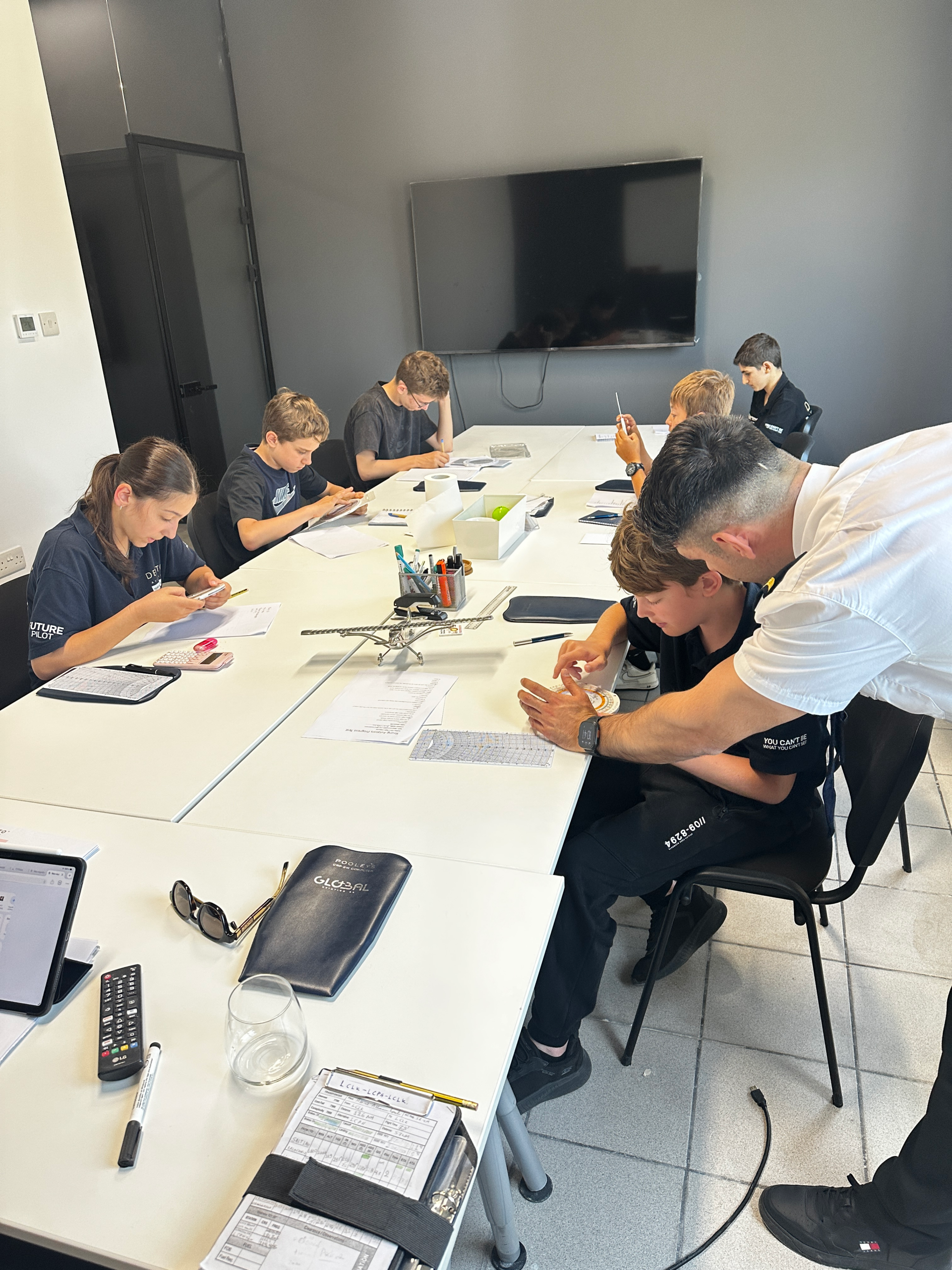
The Young Aviators Program
To address this gap, Demetris Demetriades created the Young Aviators Program. The premise is that critical aviation competencies should begin developing during childhood and adolescence, when habits, character traits and cognitive frameworks are still being formed. The programme focuses on leadership, communication, responsibility, discipline, teamwork, critical thinking and safety culture.
Conclusion
If the aviation industry is to continue reducing accidents and incidents associated with human performance deficiencies, it must look beyond competency assessment and place equal, if not greater, emphasis on competency development. While modern frameworks effectively identify strengths and weaknesses in aspiring pilots, genuine competency is not created through assessment alone; it is cultivated through years of guided development, experience, and reinforcement.
The Young Aviators Program was established to address this challenge by focusing on the early development of the behavioural, cognitive, and interpersonal competencies that underpin professional aviation performance. By nurturing these attributes during the formative years of childhood and adolescence, the programme seeks to build foundations that cannot easily be replicated during the relatively short timeframe of commercial flight training.
Early observations and results emerging from the programme have been particularly encouraging. Participants have demonstrated levels of maturity, situational awareness, accountability, communication, and professional mindset that are increasingly uncommon among newly qualified pilots. These outcomes suggest that a deliberate, long-term approach to competency development has the potential to produce a new generation of aviation professionals who enter flight training not merely with the ambition to become pilots, but with many of the core competencies already expected of them in a professional cockpit environment.
As airlines continue to search for candidates capable of thriving in increasingly complex operational environments, programmes such as the Young Aviators Program may represent an important step towards setting a new benchmark in pilot preparation, producing aviation professionals whose competency profile is not the exception, but the standard to which the industry aspires.
“The future of aviation safety will not be defined solely by how effectively we assess competencies, but by how early and how deliberately we choose to develop them.” quoted by Demetris Demetriades
Key Statistics and References
FAA Human Factors Handbook: https://www.faasafety.gov/files/events/SO/SO15/2025/SO15138606/AMT_Handbook_Addendum_Human_Factors.pdf
Airbus Human Factors Aspects in Incidents and Accidents: https://www.faa.gov/sites/faa.gov/files/2022-11/AirbusSafetyLib_-FLT_OPS-HUM_PER-SEQ01%20-%20Human%20Factors.pdf
IntechOpen: Role of Human Factors in Preventing Aviation Accidents: https://www.intechopen.com/chapters/83484